

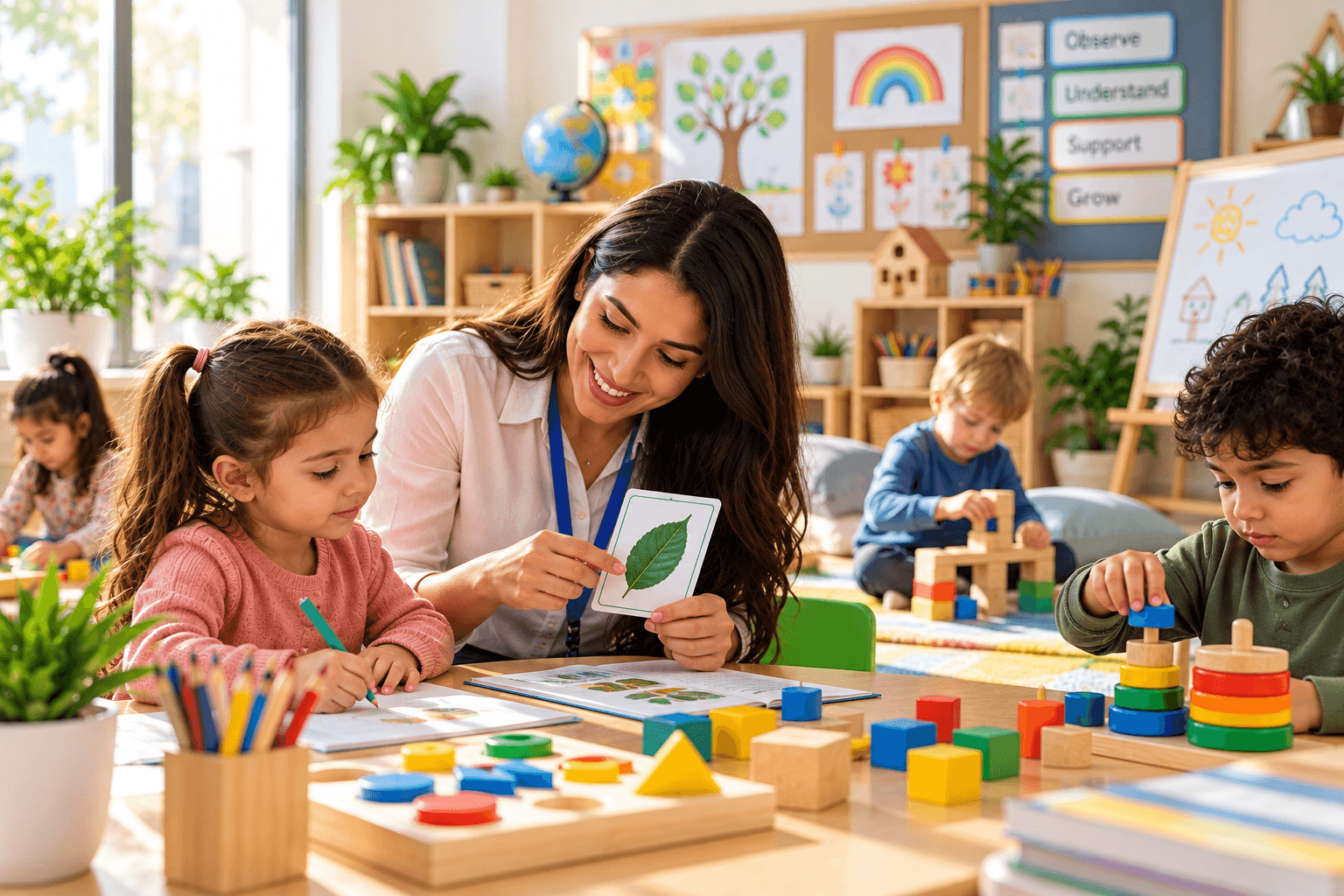
People considering early childhood education often understand the purpose of the profession without knowing what the working day actually looks like.
An early years educator does far more than supervise children or organise activities. The role combines teaching, observation, communication, safeguarding, planning and emotional support. Much of this work happens naturally during play, routines and conversations rather than through formal lessons.
Understanding these responsibilities before choosing an early years education Dubai career pathway can help aspiring practitioners decide whether the profession matches their strengths and expectations.
The Working Day Begins Before Children Arrive
Preparation is an important part of early years practice.
Before children begin an activity, educators consider the learning environment, resources and possible safety issues. Materials may need to be arranged so children can access them independently, while activities should reflect developmental needs and current interests.
Preparation does not mean controlling every moment of the day. Young children are naturally curious and may take an activity in an unexpected direction.
The educator’s role is therefore to prepare purposeful opportunities while remaining flexible enough to respond to what children actually do.
Welcoming Children Sets the Tone for Learning
Arriving at nursery or an early learning setting can feel very different from one child to another.
Some children immediately begin playing, while others may need reassurance before separating from a parent or caregiver. An educator must recognise these individual responses and help children feel secure.
Simple interactions during arrival can also provide useful information. A change in behaviour or mood may influence how a child participates throughout the day.
Creating a welcoming routine helps establish predictability. When children know what happens next, they can gradually develop confidence and independence within their learning environment.
Play Is Part of the Curriculum
To an outside observer, children building a tower may simply appear to be playing.
An experienced educator may see much more.
The activity can involve coordination, spatial awareness, problem-solving, communication and cooperation. If the tower falls, children also encounter frustration and have an opportunity to try another approach.
This is why play occupies such an important place in early years education. The educator does not need to turn every experience into a formal lesson. Instead, practitioners observe what children are discovering and introduce questions or resources that can extend the experience without taking control of it.
Observation Helps Educators Understand Individual Children
Observation is woven into everyday early years practice.
Practitioners watch how children communicate, move, interact with peers, approach challenges and engage with resources. These observations provide information that can influence future planning.
For example, repeated interest in construction may lead an educator to introduce activities involving shapes, measurements, patterns or collaborative building.
Observation can also highlight areas where a child may benefit from additional support.
IQE Academy’s article on real-world experiences in early years education explores why active experiences can be important to children’s learning.
Communication Happens Throughout the Day
Early years educators communicate almost continuously.
They listen to children, introduce new vocabulary, ask questions and model respectful interaction. They may help children explain emotions or find language for something they are struggling to communicate.
Communication with adults is equally important.
Practitioners share appropriate information with parents and collaborate with colleagues to maintain consistency in care and learning. Professional communication requires sensitivity because conversations may involve progress, behaviour or developmental concerns.
Strong communication is therefore not an additional skill in early childhood education. It is central to everyday practice.
Supporting Independence Without Expecting Too Much
Young children gradually learn to complete everyday tasks independently.
Depending on their developmental stage, this could involve selecting resources, tidying materials, following routines or making simple choices.
Educators need to find a balance between providing assistance and allowing children enough time to try things themselves.
Helping too quickly can remove an opportunity for learning, while expecting too much can create unnecessary frustration.
Understanding child development helps practitioners judge when to intervene and when to allow children to work through a challenge. These small moments can gradually strengthen confidence, persistence and decision-making.
Safeguarding Is Part of Everyday Professional Practice
Safeguarding is not separate from teaching. It is embedded in how educators supervise children, maintain professional boundaries, respond to concerns and create safe environments.
Practitioners need to understand their responsibilities and follow the procedures of their educational setting.
Professional training provides important knowledge in this area because safeguarding decisions should not be based on assumptions.
Learners considering an early years career can explore the content and requirements of IQE Academy’s NCFE CACHE Level 3 Early Years Educator programme, which prepares learners for professional early-years practice.
Working With Parents Strengthens the Learning Process
Children move between home and their educational setting, making communication between parents and practitioners valuable.
Parents can provide insights into routines, interests, language and experiences at home. Educators can share observations from the learning environment.
Neither perspective provides the entire picture independently.
When families and practitioners communicate constructively, they can better understand changes in behaviour, celebrate progress and create more consistent support.
IQE Academy has explored this relationship in its existing article on parent-educator partnerships in early years education.
Inclusion Changes How Activities Are Planned
An inclusive classroom does not assume that every child will engage with an activity in the same way.
Children may differ in communication, physical development, confidence, sensory preferences and previous experiences. Educators therefore need to consider whether learning opportunities are accessible to different children.
Sometimes a small adjustment can make participation easier without changing the objective of an activity.
This requires practitioners to observe carefully and avoid unnecessary comparisons between children. Inclusion works best when it becomes part of everyday planning rather than something introduced only after a child experiences difficulty.
Reflection Happens After the Activity Ends
Professional early years practice involves asking questions about what happened after an activity.
Were children interested? Was the task too easy or too difficult? Did the environment encourage participation? Was one child unintentionally excluded? What could be changed next time?
Reflection turns experience into professional learning.
Educators who regularly examine their practice can make informed adjustments rather than repeating activities simply because they have always used them.
This reflective approach becomes increasingly valuable as practitioners gain experience because professional growth depends not only on how long someone has worked but also on what they learn from that experience.
Training Helps Turn Enthusiasm Into Professional Practice
Enjoying the company of children is valuable, but early years education requires professional knowledge alongside enthusiasm.
Practitioners need to understand development, safeguarding, observation, communication and learning approaches. Qualifications can provide a structured way to build this knowledge while practical experience develops confidence in applying it.
IQE Academy offers early years education pathways for individuals interested in developing professional skills for this sector. Learners should review current entry, placement and assessment requirements before choosing a programme so that the qualification aligns with their circumstances and intended career direction.
A Career Built Around Children’s Development
The everyday responsibilities of an early years educator may appear simple when viewed individually. A conversation, story, construction activity or transition between routines can each become meaningful when supported by someone who understands child development.
That is what makes the profession both demanding and rewarding.
For people considering early years education in Dubai, understanding the actual role before beginning training can lead to better career decisions. Professional preparation then provides the knowledge needed to turn everyday interactions into safe, inclusive and purposeful learning experiences.